
Bharatanatyam as a Socio-Cultural Institution
As written for the Indian Fine Arts Academy of San Diego 19th Annual Music and Dance Festival Souvenir
Bharatanatyam, one of India’s most prominent classical dance forms, reflects the socio-cultural, economic, and religious structures that enabled its emergence and evolution. Originating in the temple traditions of Tamil Nadu and later codified in the Thanjavur region, Bharatanatyam transitioned through ritual, courtly, and proscenium contexts. This article examines the historical codification of Bharatanatyam by the Tanjore Quartet, the role of the orchestra, and the evolving dynamics between live and recorded musical accompaniment. Drawing upon historical scholarship, performance analysis, and oral insights from Padma Shri Vidya Nidhi Dr. Narthaki Nataraj, the study situates Bharatanatyam as a living tradition negotiating continuity, specialization, and modern constraints. The article further explores a dancer’s journey and audience engagement as critical factors in sustaining artistic integrity in contemporary practice.
Art, Society, and Cultural Capital
Artistic production is closely tied to societal stability and prosperity. The Thanjavur delta of Tamil Nadu, enriched by agrarian prosperity and religious patronage, became a significant center for classical arts. Bharatanatyam emerged within this ecosystem as both a ritual and performative practice embedded in social, spiritual, and aesthetic frameworks. In South India, temple economies and royal courts functioned as cultural institutions that fostered music, dance, and literature.
Origins and Codification of Bharatanatyam
Historically referred to it as Sadhir or Daasiyaattam, Bharatanatyam was performed by Devadasis as a form of temple service (seva) and artistic offering. The early nineteenth-century intervention of the Tanjore Quartet—Chinnayya, Ponnayya, Sivanandam, and Vadivelu—was instrumental in codifying the dance’s technique, repertoire, and pedagogical structure. Their work integrated rhythmic systems (tala), melodic frameworks (raga), literary compositions, and movement vocabulary into a coherent classical format. This codification enabled transmission beyond spaces and facilitated institutionalized training. As dancers traveled to and from Thanjavur, Bharatanatyam spread across regions, leading to the establishment of schools that continue to trace their lineage to the Thanjavur bani. Despite regional adaptations, the Thanjavur style remains a normative reference point for technique, aesthetics, and repertoire.
From Temple Ritual to Proscenium Performance
The transformation of Bharatanatyam from temple ritual to court performance and eventually to the modern proscenium stage reflects broader socio-political changes. Court patronage necessitated temporal condensation and aesthetic reconfiguration, leading to the structured recital format known as the Margam. The abolition of the Devadasi system in the early twentieth century disrupted traditional transmission mechanisms. Subsequently, Bharatanatyam was recontextualized as a secular stage art, enabling its survival but also altering its social and performative dynamics.
The Margam as Performance Framework
The Margam traditionally encompasses items such as: Sollukkattu, Kauthuvam, Jathiswaram, Sabdam, Varnam, Keerthanam, Padam, Javali, Slokam, and Thillana. While contemporary performances often present a selective Margam due to temporal and thematic considerations, the framework continues to underpin Bharatanatyam pedagogy and recital structure.
The Nattuvanar and the Orchestra
Central to Bharatanatyam performance is the Nattuvanar, who functions as rhythmic conductor, artistic coordinator, and interlocutor between dancer and orchestra. Positioned as the nadu angam (central limb), the Nattuvanar ensures cohesion between movement, rhythm, and musical phrasing. Historically Veena, Mugaveena, Flute where the musical instruments that accompanied the orchestra. Violin is a modern addition to not just dance but to music also. Violin was introduced as an instrument into South Indian music by Vadivelu of Thanjavur Quartet. The Mridangam for dance was smaller in profile compared to its contemporary equivalent.
Traditionally, Nattuvanars were polymaths trained in dance, vocal music, percussion, konnakkol, and literary interpretation. This holistic expertise enabled balanced construction of compositions that integrated abhinaya, rhythm, musicality, pacing, costume, and spatial design. According to Padma Shri Vidya Nidhi Dr. Narthaki Nataraj, this unified role has fragmented in contemporary practice into specialized functions such as jathi composition, rhythm design, music composition, and textual consultation. While specialization allows technical refinement, it is a variation from the integrated artistic vision historically embodied by the Nattuvanar.
Live Orchestra and Recorded Music
Economic constraints, scheduling challenges, and increasing performance frequency have led many dancers to adopt recorded musical accompaniment. This shift dynamics. significantly impacts performance. Live orchestras engage in reciprocal energy exchange with dancers and audiences, enabling improvisation and manodharma, a core aesthetic principle in Indian classical arts. Performances can be dynamically altered in response to time, space, and audience engagement. Recorded music, while logistically efficient, imposes f ixed temporal structures, requiring dancers to adapt to predetermined cues. Dr. Narthaki Nataraj characterizes this distinction as “the difference between tasting honey and writing the word ‘honey’ on paper”, while acknowledging the inevitability of recorded music in contemporary contexts.
Pedagogy, Progression, and Manodharma
The pedagogical trajectory of a Bharatanatyam dancer includes systematic training in adavus, repertoire mastery, arangetram, and sustained solo performance. Unlike musicians, dancers often develop manodharma gradually after formal debut, through years of embodied practice and reflective engagement. This prolonged discipline transforms the dancer into a “tapasvi”, whose performance reflects accumulated labor, aesthetic maturity, and creative agency. Consequently, identical repertoire may be structures. Sustaining the art form requires interpreted and presented differently across performances, shaped by context, energy, and artistic intuition.
Learning Through Transmission Observation and Oral
Observation of senior artists remains a critical pedagogical tool in Bharatanatyam. Live performance offers insights into interpretive strategies, rhythmic complexity, narrative development, and audience engagement beyond codified technique. My personal experience accompanying Dr. Narthaki Nataraj on international performances illustrates how mature artistry allows for continuous reinterpretation on every stage including at rehearsals, highlighting the fluid and emergent nature of performance knowledge.
Audience Engagement and Cultural Literacy
Audience literacy plays a vital role in sustaining Bharatanatyam as a living tradition. Understanding lyrical content, narrative structure, and rhythmic nuance enhances reception and fosters deeper engagement. Dance literacy can be developed by just watching many performances. Post-performance dialogue between artists and audiences strengthens cultural transmission and provides meaningful validation. In this context, informed appreciation functions as an alternative economy of recognition within the performing arts.
Conclusion
Bharatanatyam exists at the intersection of history, society, and artistic innovation. While grounded in codified tradition, it continues to adapt to contemporary realities shaped by specialization, technological mediation, and shifting patronage structures. Sustaining the art form requires integrated engagement from performers, scholars, institutions, and audiences, ensuring that Bharatanatyam remains both historically rooted and dynamically responsive.
About the Author
Aarthi Narain is a Bharathanatyam dancer and disciple of Guru Padma Shri and Vidhya Nidhi Dr. Narthaki Nataraj. Aarthi is the founder and Artistic Director of Archana School of Dance in San Diego.
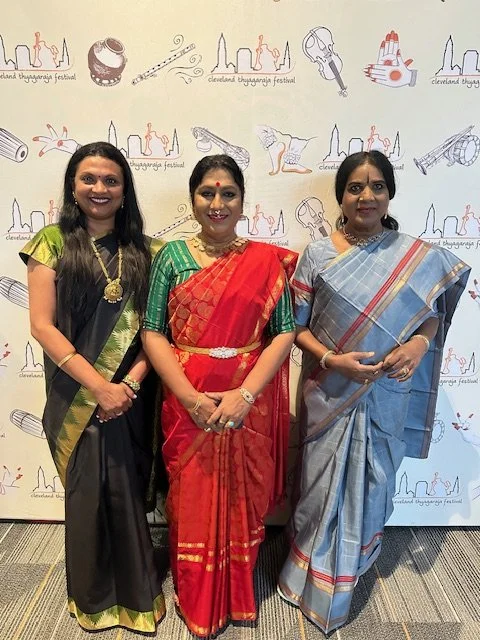
Aarthi Narain (left) with Guru. Padma Shri Dr. Narthaki Nataraj (center) and Kalai Valarmani Shakthi Bhaskar (right)
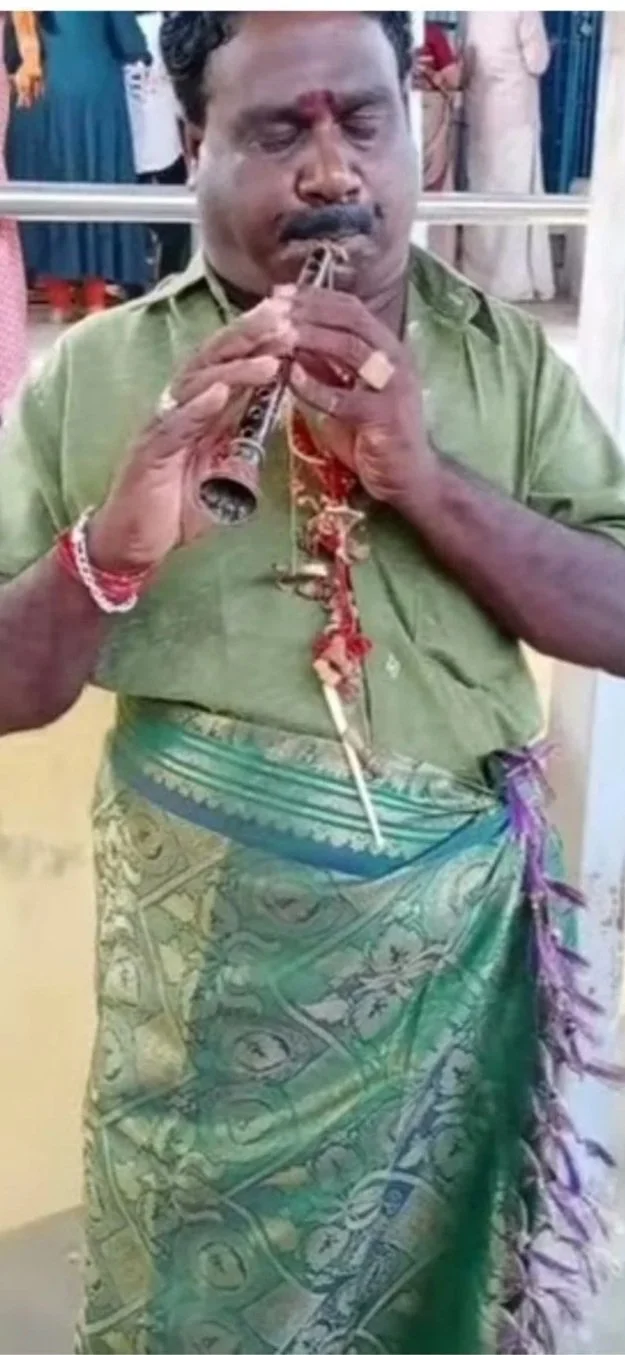
Artist playing Mugaveenai
Source: The Hindu (Mugaveenai- a wind instrument that is the precursor to modern-day nadaswaram)
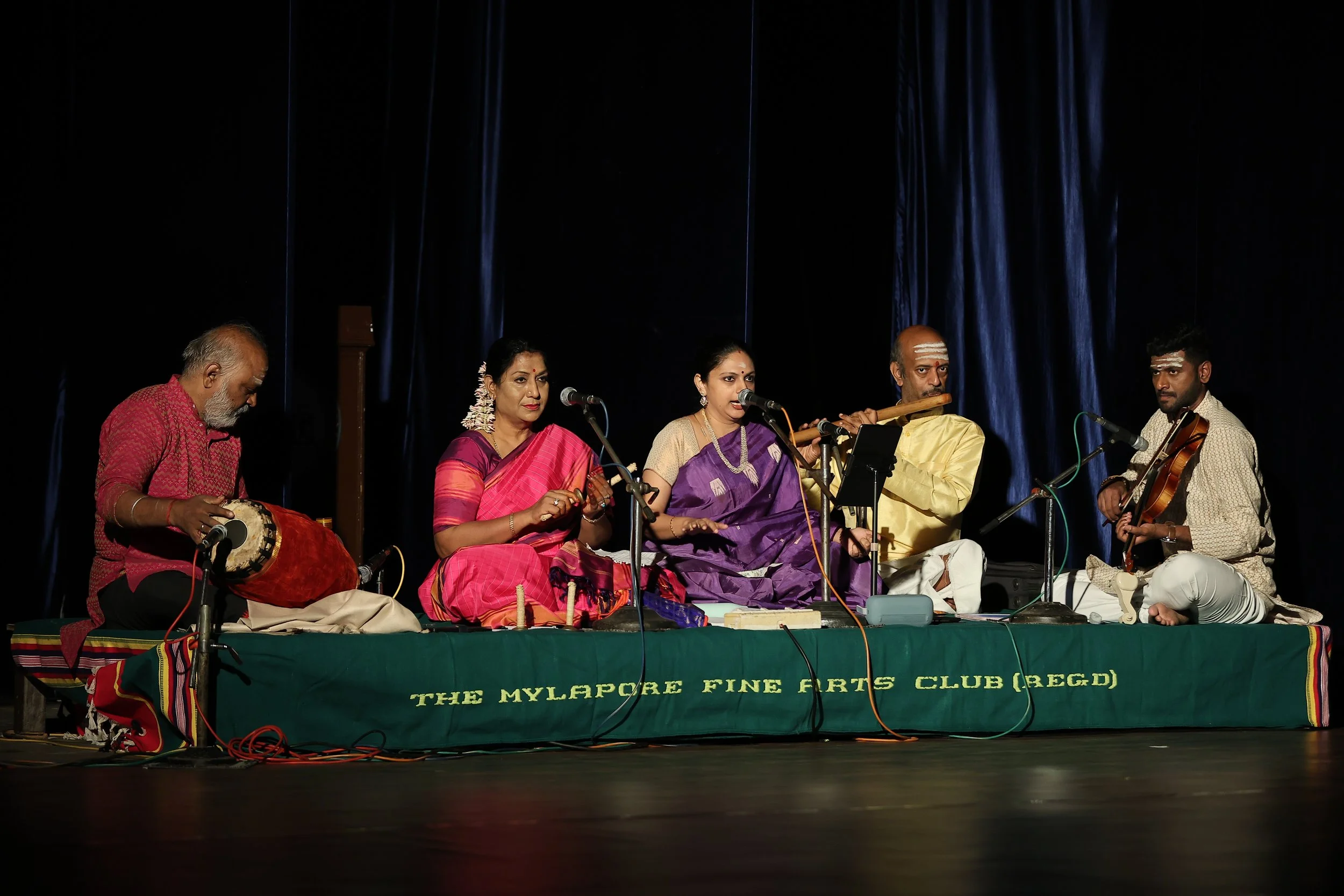
Live Orchestra (Left to Right): Sri. Nagai Narayanan on Mridangam, Guru. Padma Shri Dr. Narthaki Nataraj on Nattuvangam, Smt. Bhavya Hari on Vocal, Sri. Ramani Thyagarajan on Flute, Sri. Durai Srinivasan on Violin.
